
What does ImageReverse search?
An upload can be checked for same-photo, cropped, resized, and near-duplicate candidates. Search coverage varies, so every result must be reviewed in context.
Upload a photo to find exact or near-duplicate matches, review sources, detect faces, or search by image URL.
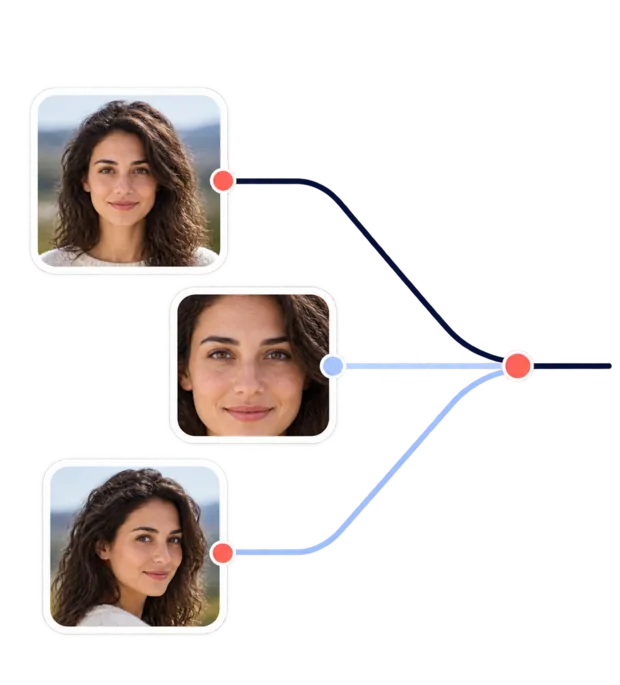
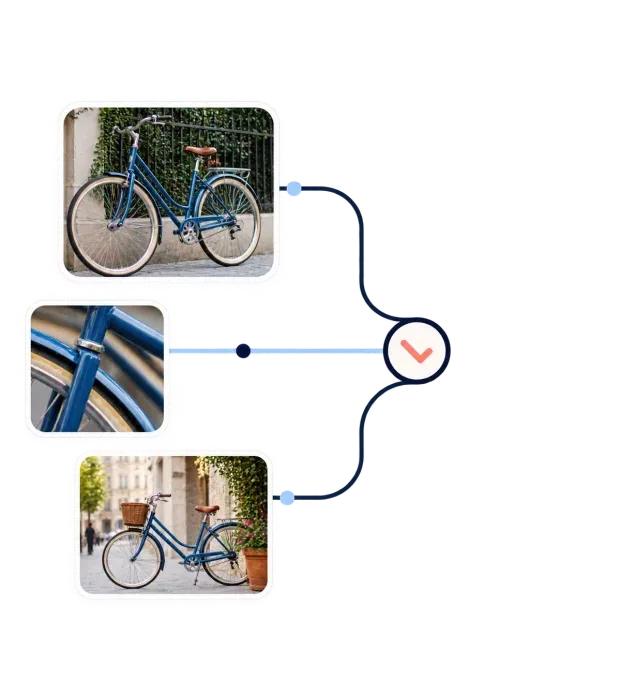
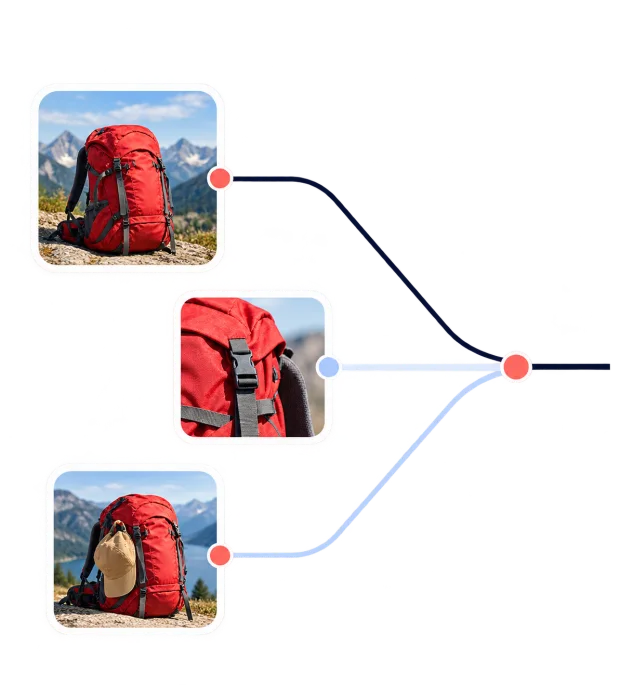
Upload a photo to find full, partial, same-photo, and near-duplicate visual candidates.
The selected provider opens in a new tab and processes the URL under its own terms.
Searching for visual candidates.
These four facts define the service, its access model, and the limits of a result.
An upload can be checked for same-photo, cropped, resized, and near-duplicate candidates. Search coverage varies, so every result must be reviewed in context.
A match is an exact, cropped, resized, or near-duplicate candidate. It does not prove identity, ownership, permission, or first publication.
Use the source verification workflow to compare the full image, page context, visible date, attribution, and independent evidence before relying on a candidate.
No. Uploads and reusable results are stored privately for up to 30 days to avoid duplicate processing and are not published as a searchable upload library. Read the privacy policy for details.
Read the image handling policy for retention details or the search engine comparison for differences in coverage and match type.
Use image matching for copies of a submitted picture, a face-focused route for a portrait, a broader visual search for object discovery, or a local file tool when you do not need a web lookup.
| Your question | Best starting route | What it returns | Important limit |
|---|---|---|---|
| Where does this same picture appear? | Run reverse image search | Exact-file and near-duplicate candidates, domains, source counts, and recorded dates. | Search coverage is incomplete, and a recorded date is not necessarily the original publication date. |
| Does this portrait appear elsewhere? | Use face recognition search | A highlighted face region and indexed same-photo or near-duplicate face-bearing images. | A visual candidate is not proof of a person's identity and still needs source verification. |
| What object, place, product, or broader visual looks similar? | Use a broader visual search | Results may include objects, products, exact copies, or altered versions. | Coverage, privacy terms, filters, and failure cases vary between services. |
| What can the file itself tell me? | Inspect metadata or compare two images | Dimensions, selected metadata, hashes, or a transparent perceptual comparison. | File clues do not search the web and metadata can be missing, edited, or stripped. |
Separate exact files, altered copies, partial reuse, and broadly related subjects before comparing sources.
Review the page context, visible date, attribution, image dimensions, and links to earlier versions.
A visual result does not by itself prove identity, authorship, ownership, permission, or first publication.
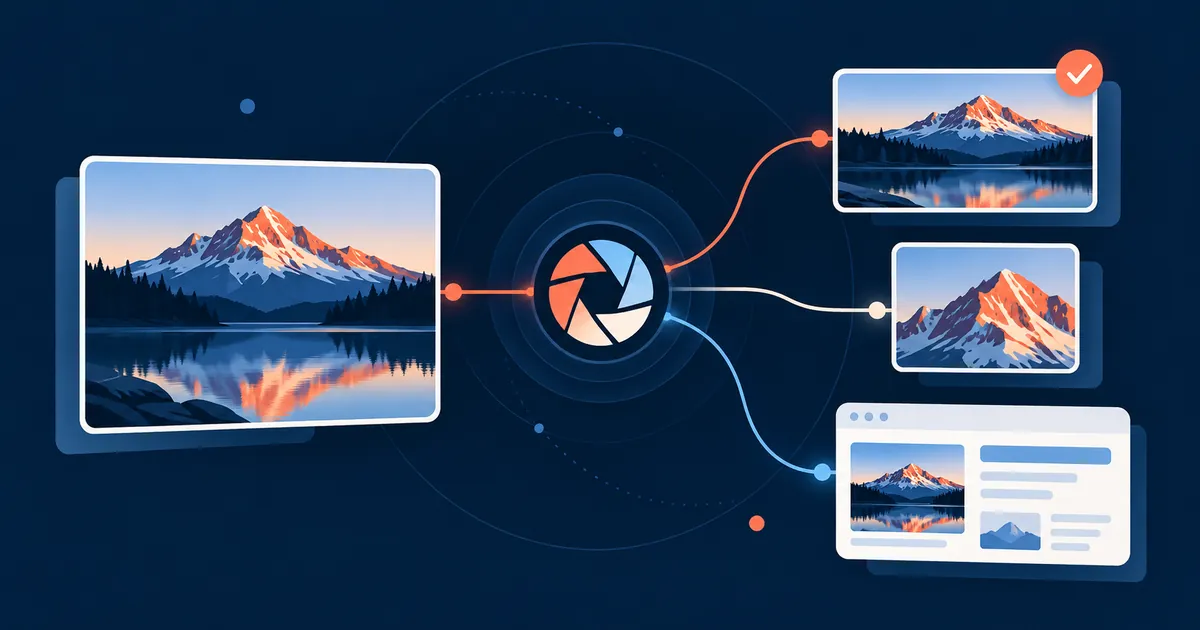
A useful investigation separates file facts, visual matches, and publication evidence. Start with the original image, choose a search based on your question, and verify each candidate at its source.
Record its dimensions, format, embedded metadata, and SHA-256 fingerprint before changing it.
Search the full frame for direct copies. Then crop around a distinctive face, object, or detail when broader results are needed.
Open promising pages and compare dates, attribution, surrounding context, and independent publications before drawing a conclusion.
New to the process? Begin with how reverse image search works, or compare all image investigation tools.
Every result label answers a narrow question. Use these definitions before you draw a conclusion from a match.
Move through tools, topic paths, research guides, and service information. Every card links directly to one canonical page, and the collection advances automatically while remaining fully crawlable.
Upload a portrait and search the ImageReverse face index for candidate appearances.
Choose a structured learning path within reverse image search and visual research.
Find a practical guide for image search, verification, provenance, safety, or rights research.
Upload an image and run a paid Google reverse image search for full and partial visual matches.
Choose the image-search or file-analysis tool that fits a specific investigation.
Start here when you need to choose a search method, improve a weak query, or understand why two engines return different evidence.
Learn how reverse image search finds exact copies, altered images, shared subjects, and visual similarities, plus how to interpret each result.
Understand what ImageReverse does, how its evidence is handled, and where its limits are stated.
Choose the right search path for a photo, URL, crop, or screenshot.
Face search can find possible appearances across an indexed collection. The difficult part is evaluating whether a candidate is actually the same person.
Trace an image through dated pages, larger files, credits, and archive records while separating the earliest indexed result from the likely original source.
Understand how uploads, search copies, logs, metadata, and privacy requests are handled.
Build an evidence trail toward the earliest credible publication.
Source tracing is an evidence problem. A useful conclusion combines visual matches with publication records, credits, file quality, and independent context.
Use photos, screenshots, and image URLs for reverse image search on current mobile browsers without losing useful context.
Understand the lawful-use rules, prohibited uses, responsibilities, and evidence limits.
Prepare full-frame and cropped queries for stronger visual matches.
An authentic photograph can still be paired with a false caption. Verification tests each part of the claim separately.
Compare Google Lens, Bing Visual Search, and TinEye by match type, useful filters, privacy tradeoffs, and the investigation task each handles best.
Reach the correct ImageReverse address for an editorial, privacy, rights, security, or product request.
Measure coarse visual similarity between two files.
Technical clues are strongest when their purpose and failure modes are explicit. Metadata can be edited; hashes answer different questions; provenance records need validation.
A practical photo-verification workflow using provenance, reverse image search, metadata, location clues, and source context.
Request review of an indexed ImageReverse result and distinguish index removal from source removal.
Inspect dimensions, format, hashes, and common EXIF clues.
The safest workflow preserves evidence, verifies the source, uses the correct reporting channel, and avoids confronting an uncertain match publicly.
Check possible profile-photo reuse with reverse image search, source-page review, and safety checks without turning similarity into an identity claim.
Review how ImageReverse selects, verifies, writes, corrects, and maintains editorial content.
Finding a copy is the beginning of a rights investigation. Ownership, licensing, exceptions, and the identity of the publisher still need to be checked.
Find alternate versions, related compositions, and visually similar references by defining the match type, testing focused crops, and comparing engines.
Learn how ImageReverse prepares queries, classifies candidate appearances, and verifies source evidence.
Video search works best as a frame-selection problem. The most useful frame is not always the sharpest or most dramatic one.
Find a video's likely source by selecting high-information keyframes, searching them as still images, and comparing upload dates, edits, and context.
Find any canonical ImageReverse tool, topic, guide, policy, or removal route.
Read EXIF dates, camera fields, GPS tags, dimensions, and hashes, then judge each clue in light of metadata that may be stripped or edited.
Review separate evaluation and release gates for semantic, place, object, and face models.
Protect photography with durable ownership records, practical image monitoring, license checks, evidence capture, and proportionate removal options.
Compare Free, Plus, Protect, and Advanced image-search plans by search volume, source access, monitoring, and enabled research tools.
Document unauthorized image use, identify the responsible party, and choose an accurate removal path without overclaiming.
Prepare stronger reverse image search queries with an untouched original, evidence-safe working copies, controlled crops, rotation, and format choices.
Diagnose an empty reverse image search by testing whether the query is represented, then checking crops, file quality, and query choice.
Choose between an image URL, local upload, screenshot, and page-level search without losing source context or privacy information.
Distinguish duplicate detection, altered-copy matching, object recognition, and face similarity so you choose the correct search system.
Learn how reverse face search moves from detection and embeddings to candidate ranking, source-page review, contradiction checks, and identity verification.
Choose and prepare a face-search photo with useful pose, lighting, resolution, and context while preserving the original file and protecting privacy.
Review face-search candidates with source context, contradiction checks, and an explicit confidence record before deciding they show the same person.
Build a lawful personal-image audit using face search, exact-copy search, text queries, source verification, and a repeatable evidence log.
Verify an unwanted photo appearance, preserve evidence, assess immediate risk, and choose the source, platform, or search-removal path that fits.
Verify a screenshot by separating interface, text, image, account, and timeline claims, then tracing each layer to independent evidence.
Evaluate provenance records, source history, visual inconsistencies, metadata, and corroborating evidence without relying on one detector score.
Choose between SHA-256, average hash, difference hash, and perceptual matching for integrity checks and near-duplicate triage.
Understand what C2PA Content Credentials record, how validation works, what trust depends on, and why missing credentials are inconclusive.
Trace a photo from copies and captions to a credible photographer, agency, archive, or licensing record without assuming the oldest result owns it.
Trace a meme by separating its image template, caption, remix history, and first documented spread, then record the strongest evidence for its lineage.
Recover source leads from a partial image by identifying stable features, testing crop expansion, and comparing partial matches carefully.
Select a compact set of high-information video frames using scene change, stability, uniqueness, text, and source value.
Separate capture time, file time, upload time, publication time, crawl time, and archive time to build a defensible image timeline.
Interpret EXIF, IPTC, and XMP fields as workflow clues, distinguish missing from contradictory data, and verify important claims independently.
Build a sustainable image-monitoring routine with representative files, stable queries, triage rules, and a verified reuse log.
Continue browsing the ImageReverse guide library on page 2.
Continue browsing the ImageReverse guide library on page 3.
Separate what a reverse image match demonstrates from claims about identity, authorship, permission, dates, and original publication.
Learn how exact copies, recompressed files, crops, overlays, and major edits create different kinds of reverse image matches.
Choose the tool by the question you need to answer. Each route has its own method, limits, and useful output.
Work backward from copies and crops to the earliest credible publication.
Open Image Source Finder
Inspect metadata and combine file clues with source and context checks.
Open Image Metadata Checker
Use consent-aware self-search to investigate possible impersonation and reuse.
Read the responsible face search guide
Monitor important images, preserve evidence, and choose a proportionate response.
Read the creator rights guideFollow a topic from first principles through investigation, result review, and responsible response.
Start here when you need to choose a search method, improve a weak query, or understand why two engines return different evidence.
Face search can find possible appearances across an indexed collection. The difficult part is evaluating whether a candidate is actually the same person.
Source tracing is an evidence problem. A useful conclusion combines visual matches with publication records, credits, file quality, and independent context.
An authentic photograph can still be paired with a false caption. Verification tests each part of the claim separately.
Technical clues are strongest when their purpose and failure modes are explicit. Metadata can be edited; hashes answer different questions; provenance records need validation.
The safest workflow preserves evidence, verifies the source, uses the correct reporting channel, and avoids confronting an uncertain match publicly.
Finding a copy is the beginning of a rights investigation. Ownership, licensing, exceptions, and the identity of the publisher still need to be checked.
Video search works best as a frame-selection problem. The most useful frame is not always the sharpest or most dramatic one.
Original workflows, comparison tables, and decision frameworks built around real investigation tasks.
Learn what reverse image search can establish, what it cannot prove, and how different matching systems complement one another.
Estimated reading time: 8 minutes. Topic: Foundations.
Read What Is Reverse Image Search?
9 minute guide in Source Tracing.
Read How to Find the Original Source of an Image
7 minute guide in Mobile.
Read Reverse Image Search on iPhone and Android
A task-based matrix for selecting complementary engines instead of assuming one index covers the whole web.
Estimated reading time: 8 minutes. Topic: Foundations.
Read Reverse Image Search Engine Comparison
Verify who published a photo, when it appeared, what it depicts, and whether the caption fits the visual evidence.
Estimated reading time: 10 minutes. Topic: Verification.
Read How to Verify a Photo Online
Use consent-aware checks, profile context, and independent verification to spot stolen photos and reduce false accusations.
Estimated reading time: 8 minutes. Topic: Safety.
Read Reverse Image Search for Catfish and Fake ProfilesThe face recognition search returns same-photo and near-duplicate candidates with source context for review. Query uploads and reusable results are stored privately for up to 30 days as described in the image handling policy.
No public upload library
Saved queries are private and are not added to the crawled index.
Candidate matches
Possible identities are presented as leads to verify, not proof by themselves.
Clear processing boundaries
The interface identifies any separate service before you deliberately send it a URL.