
The Limits of What a Reverse Image Match Can Prove
Separate what a reverse image match demonstrates from claims about identity, authorship, permission, dates, and original publication.
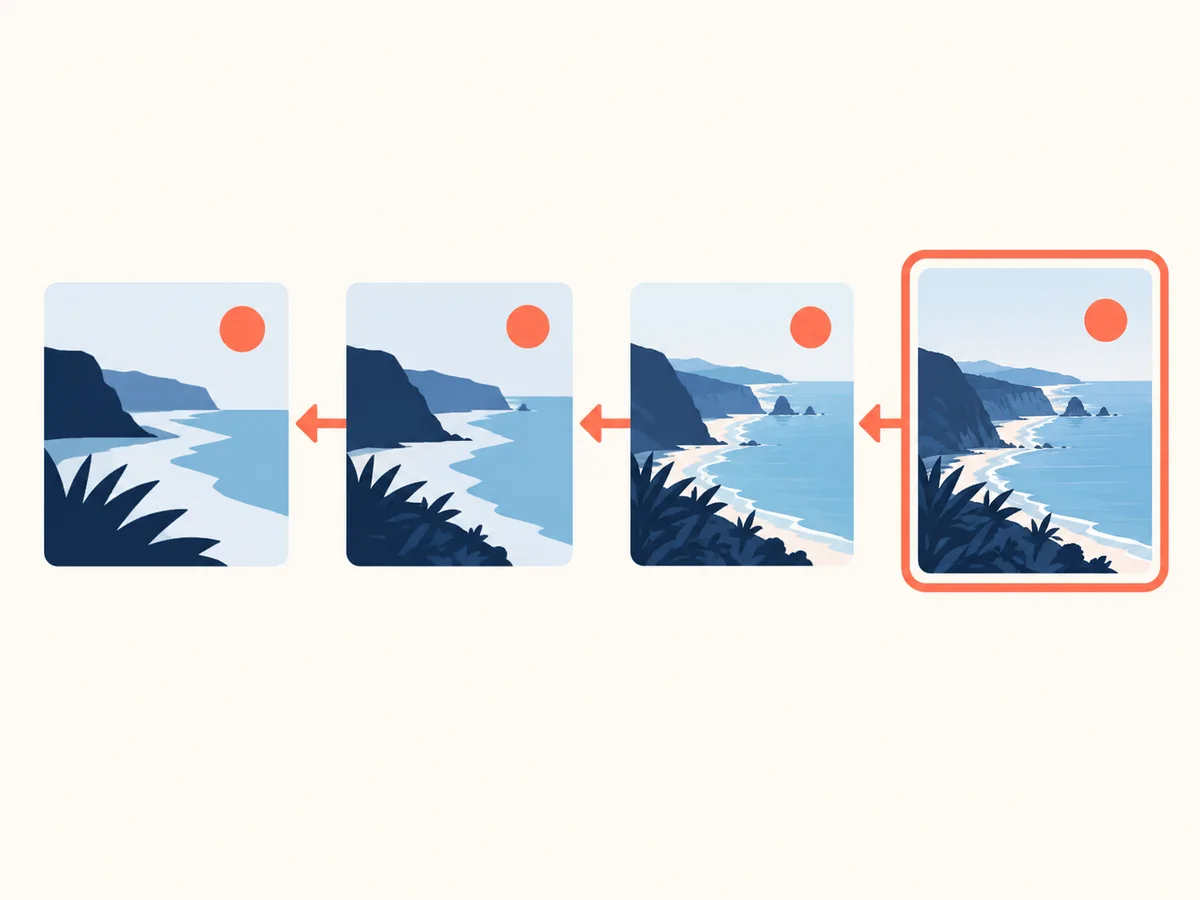
Use the comparison for this decision
Decision
A reverse image result can show that a provider found a visually related indexed file, but it does not automatically prove who created or first published it.
Evidence to compare
Identity, authorship, permission, event context, and publication order each require their own supporting records.
Limit to record
Write findings with calibrated language that states the providers, query variants, sources, dates, and unresolved gaps you actually checked.
Build a reliable baseline with the Reverse Image Search workbench, then use the reverse image search fundamentals learning path to understand how crops, indexes, and similarity change the result.
A reverse image match is a lead supported by visual similarity and what the search index currently contains. It can help locate copies, altered versions, source pages, and related subjects. It cannot carry every conclusion an investigator may want to draw. The safe approach is to separate the visible match from claims about identity, authorship, permission, time, and origin, then gather evidence for each claim independently.
Start with the narrow fact the result establishes
The narrowest defensible statement is usually simple: a named search provider returned a particular indexed image or page for a recorded query on a recorded date. After opening the result, you may be able to establish that the same frame appears on that page. Everything beyond that needs another check.
| Possible claim | What the match contributes | Evidence still needed |
|---|---|---|
| The same photograph appears elsewhere | Strong lead when stable frame details align | Direct inspection of both files and pages |
| This is the person shown | Possible candidate relationship | Reliable contextual or identity evidence |
| This person owns the account | No direct proof | Account history and trusted verification |
| This publisher created the image | Shows publication, not creation | Creator credit, portfolio, agency, or original record |
| This use was unauthorized | Shows a possible reuse location | Rights ownership, license scope, and applicable exception review |
| This is the first online publication | May reveal an earlier indexed page | Dates, archives, source records, and competing candidates |
Search ranking is not publication order
The first result is ranked for usefulness by the provider. It is not automatically the oldest page or the original source. A later, popular repost may rank above an earlier page. Build a publication trail with the Image Source Finder, compare displayed dates, and look for archived captures when the distinction matters.
An indexed page is not necessarily the creator
A news page, marketplace listing, forum post, or social account can host an image without having created it. Follow credit lines, embedded agency information, visible watermarks, portfolio records, and larger file versions. When no creator record can be confirmed, state that authorship remains unresolved.
Separate five questions that are often blended together
- File relationship asks whether two files are exact, re-encoded, cropped, edited, or merely similar.
- Subject identity asks who or what appears in the image.
- Publication history asks where and when versions appeared.
- Creative authorship asks who made the photograph or artwork.
- Rights status asks who controls relevant rights and whether a particular use was permitted.
The image match relationship ladder helps with the first question. It should not be used as a shortcut for the other four.
Use a claim and support worksheet
Write the conclusion you are considering in one sentence. Under it, list the records that directly support the claim, evidence that only provides context, and facts that contradict it. This small discipline reveals when the wording is stronger than the record.
- Record the exact query image and any crop or orientation change.
- Name every provider checked and the date of the search.
- Save the result page and direct image address when lawfully accessible.
- Describe the visual landmarks that connect the query and candidate.
- Record page dates, credits, file dimensions, and archived captures separately.
- List missing evidence before writing the conclusion.
For an exact file question, a SHA-256 fingerprint from the Image Metadata Checker can establish byte identity. For a visual-copy question, compare the images directly. Neither result proves that the person who uploaded the file had permission to do so.
Apply the framework to a profile photo
Imagine that a portrait used by one account also appears on a public company biography. The match supports that the same or an altered photograph appears in both places. It does not establish which account is genuine. The biography itself could be copied, outdated, or false. Check the surrounding pages, names, publication history, contact channels, and other independent records. If the concern is impersonation, follow the personal image safety guidance and preserve evidence before reporting the account.
Careful finding: The same portrait appears on both public pages. The available image match does not establish who controls either account, so identity remains unverified.
Use calibrated language in the final note
Useful terms include exact file match, likely re-encoded copy, visually consistent crop, same-photo candidate, related subject, earliest credible publication located, unresolved creator, and unverified permission. These phrases describe the evidence without pretending that search coverage is complete.
State the search boundary
A missing result means that no useful match was returned from the providers and query variants checked at that time. It does not prove that the image appears nowhere else. Private pages, blocked crawlers, removed files, new uploads, and unindexed sources may be absent. The zero-result diagnostic provides a structured way to test likely causes.
Preserve uncertainty instead of filling gaps
Uncertainty is part of an accurate result. If dates conflict, say so. If the oldest located page lacks a credit, record that limitation. If two faces look similar but no independent identity record connects them, do not publish a name. A bounded conclusion is more useful than a confident statement that another person cannot reproduce.
Continue with Search by Image URL vs. Upload. A decision framework for choosing the image input that preserves the strongest evidence and exposes the least unnecessary data. For another evidence check within the same investigation, use What Is Reverse Image Search?.